The Real Reason You Never Follow Through
One of the things I hear most often from women I work with is, "I know what I need to do, I'm just not doing it."
They know they need better boundaries. They know they need more rest. They know they need to stop checking emails at night, stop saying yes to everything, stop leaving themselves until last. They know what would help them feel calmer, healthier and more present. Yet despite knowing all of that, they keep finding themselves making choices that pull them further away from the life they say they want.
For years, I thought this was a discipline problem.
I approached my weight the same way I approached most things in my life. All or nothing. On track or off track. Succeeding or failing. I knew exactly what I should be doing, eating well, moving my body, getting enough sleep, but knowing and doing turned out to be two very different things.
For a long time, I believed the gap between the two meant I simply wasn't trying hard enough. That if I wanted it badly enough, I would do it. That the women who seemed to have it figured out possessed some level of discipline that I didn't.
Then I heard someone speak about the concept of competing priorities and, for the first time, the gap between knowing and doing actually made sense.
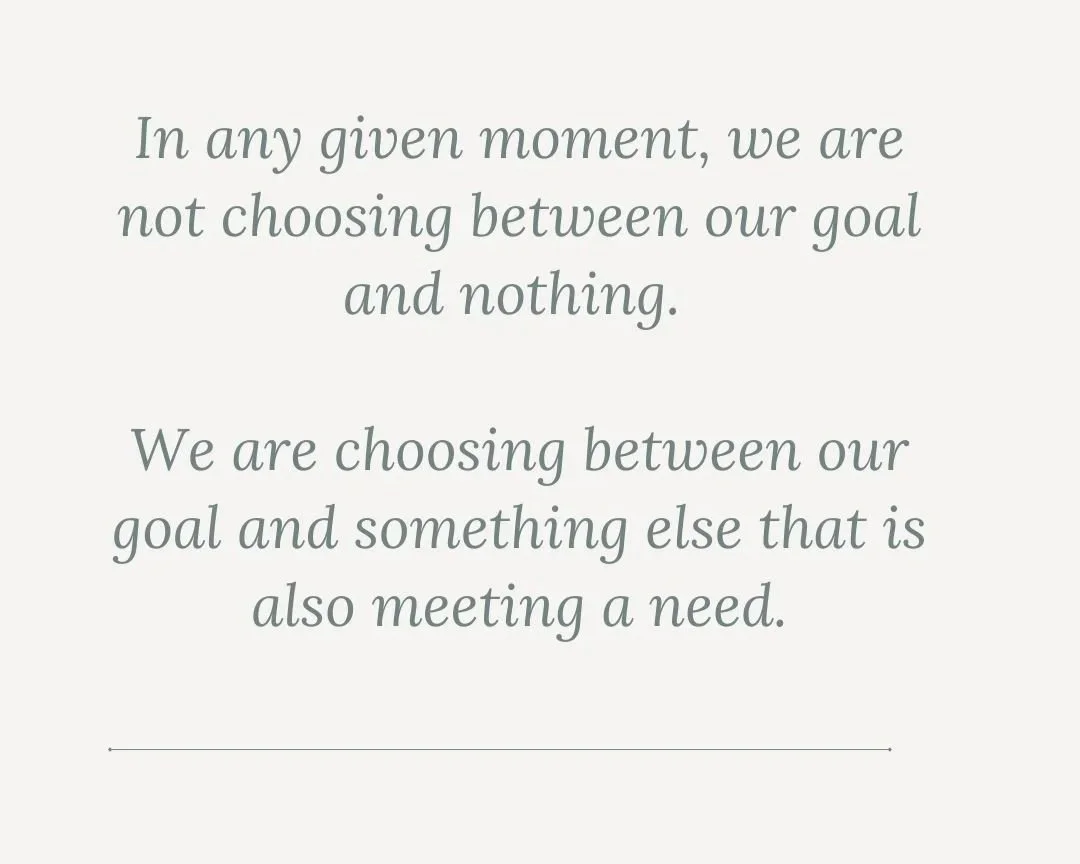
They explained that before we can change a behaviour, we need to understand the choice we're really making. Because we're never choosing between our goal and nothing. We're choosing between our goal and something else that is also meeting a need.
That idea changed everything for me.
The Two Options
In any moment, there are always two options.
Option A is the action that moves you towards what you want. It is the workout. The earlier bedtime. The difficult conversation. The boundary. The walk. The decision to close the laptop. It is the choice that serves the version of you you are trying to become and the life you are trying to create.
Option B is the alternative. The action that keeps you where you are.
For years I misunderstood Option B. I assumed choosing it meant I was being lazy, weak or lacking willpower. What I eventually realised was that Option B wasn't happening because I didn't care about Option A. It was happening because Option B was serving a purpose.
For me, Option B often looked like wine and popcorn at the end of the day. Not because I didn't care about my health, but because after spending the entire day giving to everyone else, it felt like comfort. It felt like relief. It felt like a reward. It was one of the few moments that felt like it belonged entirely to me.
When I was stressed, overwhelmed or exhausted, my brain wasn't evaluating my long-term goals, it was reaching for immediate comfort. That's what competing priorities really are.
Option A serves your future.
Option B serves your present.
The challenge is that when you're depleted, stressed or running on empty, the present usually wins.
What Option B Looks Like for Women in Corporate
For most women in corporate, Option B doesn't look the way people imagine. It rarely looks like giving up, in fact, it often looks incredibly responsible. It looks like staying on the call after it should have ended because leaving feels selfish.
It looks like answering one more email at 9pm because stopping feels irresponsible. It looks like taking ownership of problems that aren't yours because asking for help feels uncomfortable. It looks like pushing through exhaustion because resting feels unproductive.
And then at the end of the day, when there is nothing left in the tank, it looks like scrolling, wine, chocolate or mindlessly sitting in front of the television. Not because you don't care about your wellbeing, but because your system is desperately trying to recover.
The problem is that these choices often feel justified in the moment, which makes them incredibly difficult to question.
The Patterns Disguised as Virtues
What makes Option B so difficult to recognise is that it often arrives disguised as something positive.
Perfectionism feels like having high standards.
People pleasing feels like being a good person.
Overworking feels like commitment.
Never asking for help feels like independence.
Constantly pushing through feels like resilience.
Even comfort eating after a difficult day can feel like a reward you've earned.
The behaviours themselves aren't the problem. The problem is when they become the automatic response to every challenge, every stressful period and every difficult emotion. When I finally got honest about what my own Option B was giving me, I realised it wasn't really about food or wine at all, what I was actually looking for was comfort, relief and a moment that felt like it was mine.
Once I understood that, everything changed. Instead of trying to force myself to stop eating popcorn or drinking wine, I started looking for healthier ways to create the thing I was actually seeking.
Because if you don't understand what Option B is doing for you, you'll spend your life trying to white-knuckle your way towards change.
And white-knuckling rarely lasts.
The Real Cost
While Option B often provides immediate relief, there is usually a longer-term cost. Not just to your goals, but to your experience of life.
You finish another day feeling like you've somehow got it wrong despite doing more than enough. You carry the stress from work into your evening and into your sleep. You wake up already feeling behind. You become more reactive, more depleted and less present with the people you love. I know this feeling well, as for years, there were things I wanted for myself that I kept putting aside. I convinced myself they weren't that important. That now wasn't the right time. That I would focus on them later. But every time I made that choice, I was quietly eroding trust in myself.
Because deep down, we know when we're compromising on something that matters. And perhaps the biggest cost of all is that you end up creating a life that looks successful from the outside but doesn't feel particularly enjoyable from the inside. You keep telling yourself you'll slow down once this project finishes. Once work settles down. Once the kids are older. Once things become less busy.
But life doesn't suddenly start later….And before you know it, years have passed and you've become so focused on managing everything that you've forgotten how to actually enjoy the life you've worked so hard to build.
What Changes When You Start Choosing Option A
The shift begins when you stop judging Option B and start understanding it. Because once you understand what Option B is giving you, you can begin creating other ways to meet that need.
You can ask yourself:
What is Option B providing me right now?
And what would I need in order to feel safe enough to choose Option A instead?
For me, once I realised comfort eating was meeting a need for rest and reward, I could start finding other ways to create those experiences. Ways that left me feeling better the next day, not worse. That shift, from unconscious to conscious, from automatic to intentional, is where sustainable change begins. Not through discipline, or willpower. But through awareness.
Start Here
If you find yourself repeatedly choosing Option B and wondering why nothing seems to change, start by getting curious.
What is your Option B?
What need is it meeting?
What are you really looking for in that moment?
Because once you can see the competing priorities at play, you have a choice. And that choice is where change begins.
If you'd like help working through this, download my free Option A or B worksheet. It will help you identify the competing priorities keeping you stuck, understand what your Option B is doing for you, and start making choices that support the life you actually want to create.
Because one of the best feelings in the world is trusting yourself again. And building a life that doesn't just look successful, but feels good to live.